
Punjabi Garam Masala is a flavoursome condiment from North India. It is a blend of spices which is usually added to curries and other dishes to enhance the taste.
Today, I have a condiment that is used and loved by everyone these days. We often buy these masala blends, but there is nothing like homemade masala. They are tastier. we know what ingredients go into the making, thus the quality is assured.
What is Masala?
Masala is a generic term used to specify a blend of spices that is used to flavour the dish. It is usually a combination of spices, sometimes a blend of spices and herbs. Onion and garlic too may be used in some masala blend. Different kind of masalas are prepared in India, Curry powder in South India, Kala masala in Maharashtra, Panch phoran in West Bengal while it is Garam masala in North India.
What is Garam Masala? Is it very hot?
Garam masala is pre-dominantly used in North India cooking. But, there are slight variations which you often find, a few ingredients either ruled out or there is a change in quantity. Garam literally translates to hot or warm. Masala is a blend of spices that gives a characteristic taste to the dish. Here, it does not mean to say that it is hot but the blend do gives a warmth to the body. Thus, one should limit its use, it is not ideal to use on a daily basis and especially during the summer months.
What is the use of garam masala powder?
Garam masala is one of the essential condiments in the Indian kitchen. It is usually used in flavouring curries. The dry sabzi are often laced with it, making the dish flavoursome. It is often used to enhance the taste of fillings in samosa and parathas. These days, it is also used in preparing a variety of rice dishes.
How is the garam masala prepared?
Garam masala is often made by sun drying the spices for a couple of days during summer. It is then pounded and stored in bottles. One can also dry roast the spices lightly and powder them.

Let's get to the recipe of Garam Masala
Ingredients:
- 4 tablespoon coriander seed
- 4 tablespoon cumin
- 3 tablespoon black pepper
- 1 tablespoon cardamom seed
- 1.5 teaspoon clove
- 2 stick cinnamon
- 4 bay leaf
Method:
- Clean the ingredients and put them in a thick pan. Break the bay leaf into small pieces.
- Dry roast altogether on a low flame for 5-8 minutes until you get a good aroma and there is a slight change in colour.
- Let cool.
- Powder them in a mixer and store in a clean, air tight jar.
Take a tip:
- Mace may be added, but I do not use it.
A few other condiments that I have put earlier are dry powders which can be used with any meals. They are Curry leaf powder, Flax seed chutney powder, Garlic chutney powder
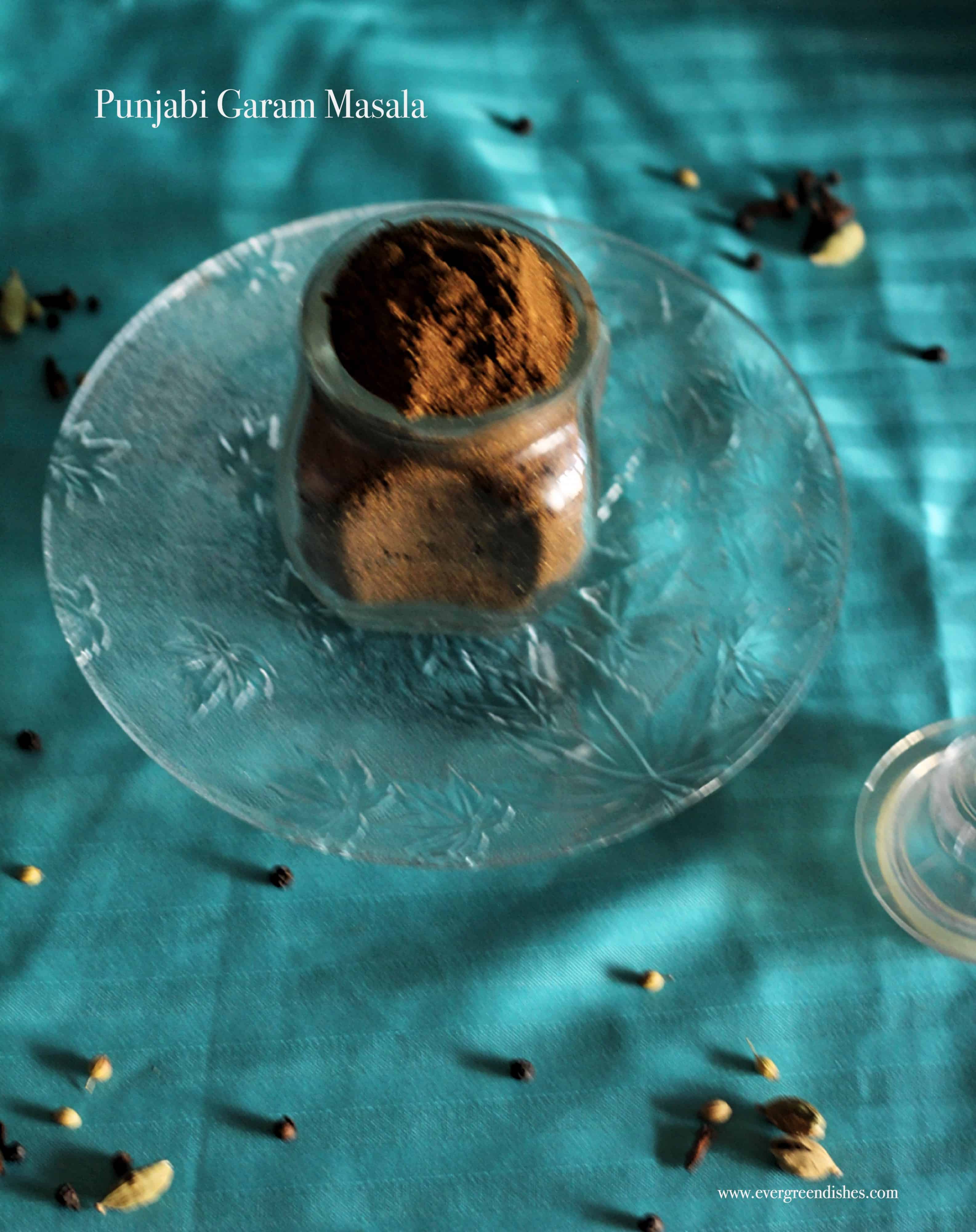
Punjabi Garam Masala
Ingredients
Equipment
Method
- Clean all the spices, put them in a thick bottom pan. Break the bay leaves into small bits.
- Dry roast them for five to eight minutes on a low flame until you get a good aroma and the colour slightly changes.
- Let cool. Grind them to a powder and store in a clean, air-tight jar.
Notes
I am sending this post to the theme "Condiments that we make at home " at our very own Healthy Wellthy Cuisines. Every fortnight, we prepare dishes on a particular theme, do check out the recipes of my co-bloggers for this theme: Maharashtrian Goda Masala, Vada Pav Chutney Powder, Achari Masala Powder, Garam Masala and Kadai Masala Mix.
I have shared a few other condiments in my e-book "30 Tasty Dal Recipes" It has the basic recipe of rasam and sambar powder that we make in South India.
If you have liked this post, do share it with family and friends. If you ever recreate it, do not forget to take a picture and tag @foodiejayashree on Instagram or @evergreendishes on Facebook
Subscribe to get a book of handy hints for free.
I did a FB/IG LIve today and one of the things I mentioned was about making your own garam masala – I will add your link to the playback on FB for a great gm recipe for my audience
a basic masala blend that can be found in all indian kitchen, i have never made punjabi garam masala at home, bookmarking this to try. thanks for sharing ingredients that would make a limited quantity, this way we can preserve the freshness of the masala too!!